Deployment patterns

See how the operating model fits an enterprise service estate.

These are illustrative patterns, not attributed customer claims. A real proposal records the systems, providers, controls, evidence, and commitments for the intended environment.

No company name, logo, quotation, or outcome is presented as customer evidence without written approval and a documented measurement basis.

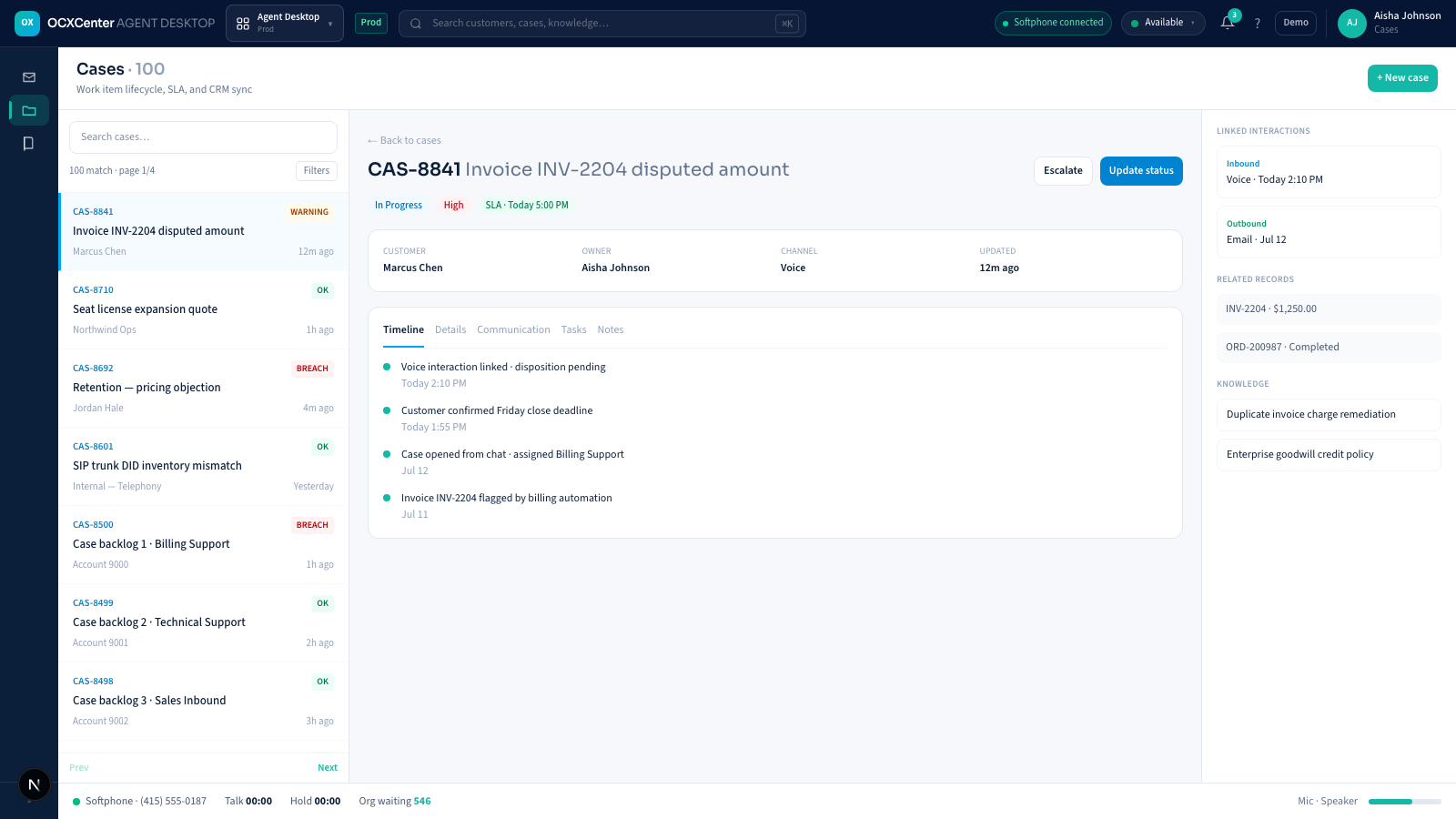
Populated case workspace with prioritized records, SLA status, timeline, linked interactions, and knowledge

Case ownership, timeline, related records, knowledge, and SLA state in one resolution workspace.

Illustrative patterns

Start with the operating boundary, not a generic deployment diagram.

Each pattern connects product workflow, enterprise systems, provider requirements, and evidence gates.

Financial services and healthcare

Regulated service operations

Connect customer context, Agent Desktop, cases, recording policy, quality, and audit evidence while provider and contractual gates remain explicit.

  1. 01Existing CCaaS and CRM remain in scope
  2. 02Workspace-scoped authorization
  3. 03Governed assistance and follow-up
  4. 04Evidence review before commitment

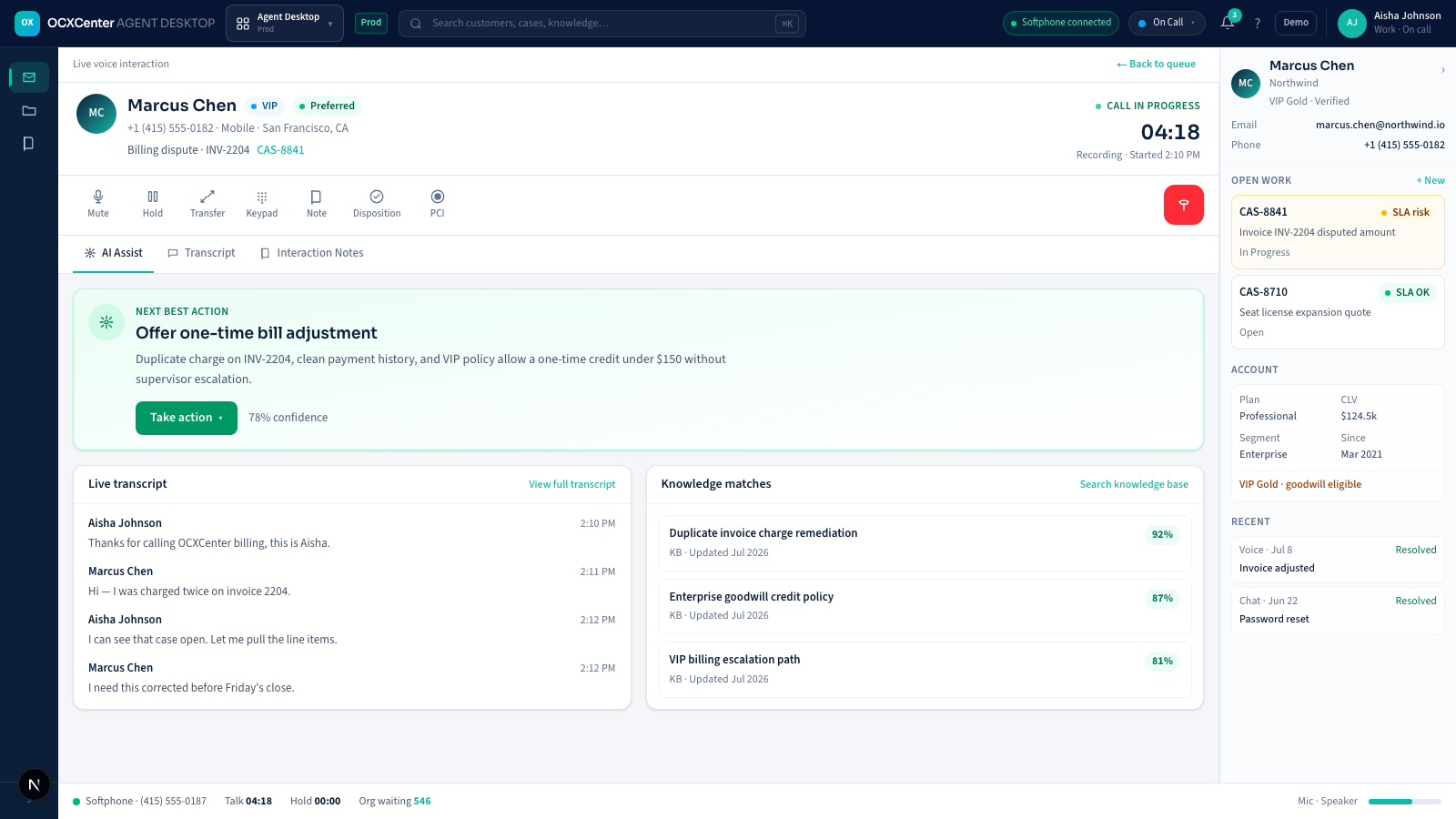
Live interaction controls, transcript, knowledge, and customer context without tab switching.

  1. 01

    Interaction controls

    Mute, hold, transfer, keypad, notes, disposition, and PCI controls.

  2. 02

    Grounded assistance

    Suggested actions remain reviewable and confidence-labeled.

  3. 03

    Live transcript

    The conversation is available beside the service workflow.

  4. 04

    Knowledge matches

    Relevant guidance is ranked without obscuring the customer record.
BPO and outsourcing

Multi-program delivery

Use separate workspaces and provider plans with shared release discipline, observability, and operating controls.

  1. 01Separate data and configuration boundaries
  2. 02Versioned automation and routing
  3. 03Provider-specific certification
  4. 04Controlled engineering-to-operations handoff

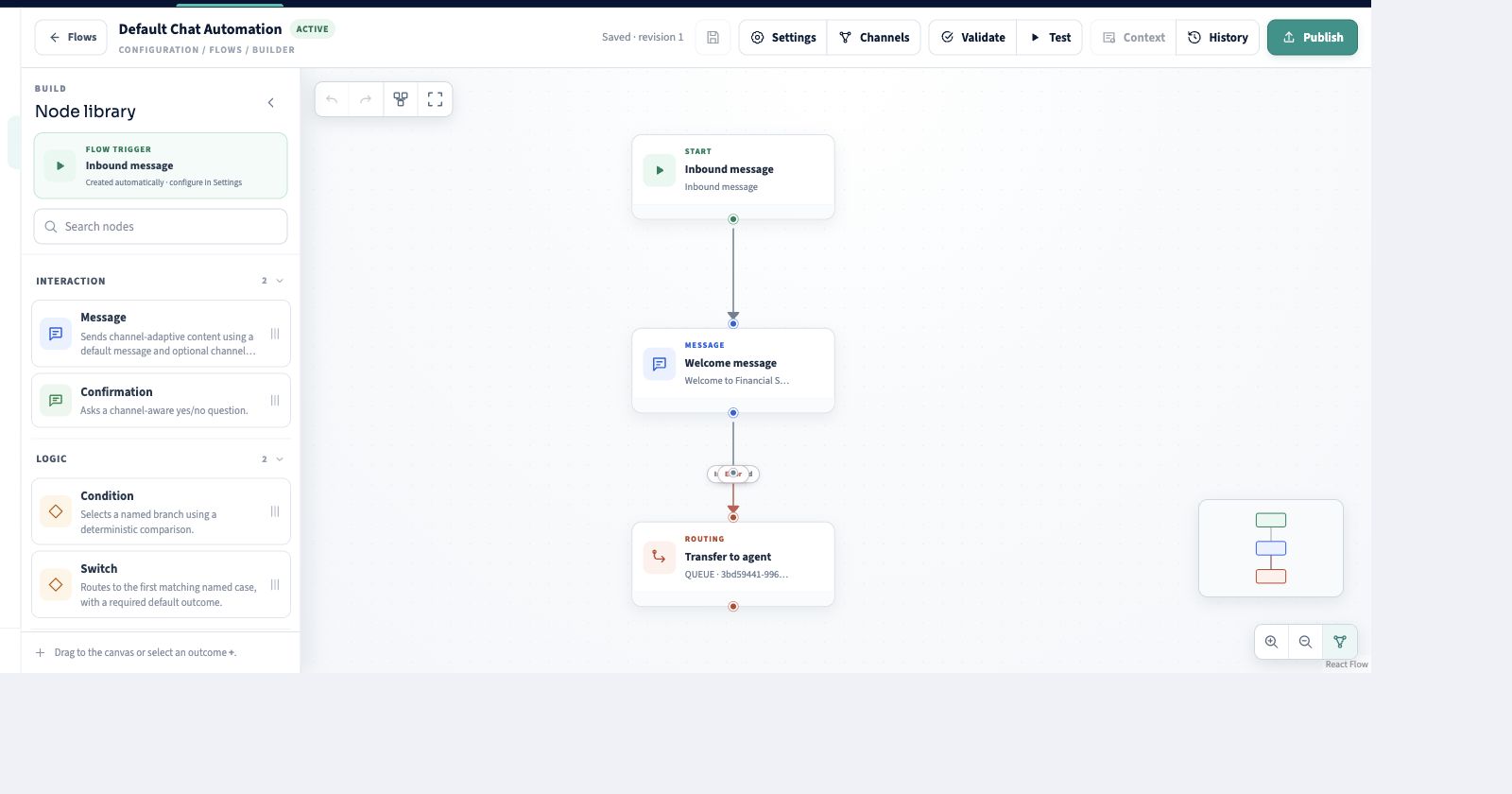
Versioned automation with validation, testing, routing, and controlled publication.

  1. 01

    Explicit journey logic

    Deterministic nodes and managed AI steps share one model.

  2. 02

    Human handoff

    Routing is a visible part of the journey rather than a hidden script.

  3. 03

    Lifecycle controls

    Validate, test, review history, and publish through defined gates.

  4. 04

    Version evidence

    Published behavior remains traceable to an immutable revision.

Customer evidence standard

A customer story is published only when the proof can be defended.

Until all three requirements are satisfied, the website labels the content as an illustrative deployment pattern—not a customer result.

Review the evidence model

01

Named source

The company, approving role, product scope, and deployment context are identified rather than implied.

02

Defensible measurement

Every outcome records its baseline, measurement method, evaluation period, and material operating conditions.

03

Written approval

The customer approves the name, logo, quotation, metrics, and publication wording before anything goes live.

This standard keeps sales material, procurement evidence, and public claims aligned. When an approved customer story becomes available, it can replace an illustrative pattern without changing the meaning of the evidence presented here.

Enterprise evaluation

Translate an illustrative pattern into your deployment design.

We tailor the walkthrough to your operating model, current stack, provider constraints, and governance requirements.